
Residential lighting
8 Modern Options for Electrical Switches
Compare switches, dimmers, sensors, timers, and connected controls while checking their wiring and load requirements.
Published Guide updated
New guide published October 14, 2026, with original guidance on a topic from the previous SoCal website. It replaces the earlier article and does not reproduce its text or claim its publication date.
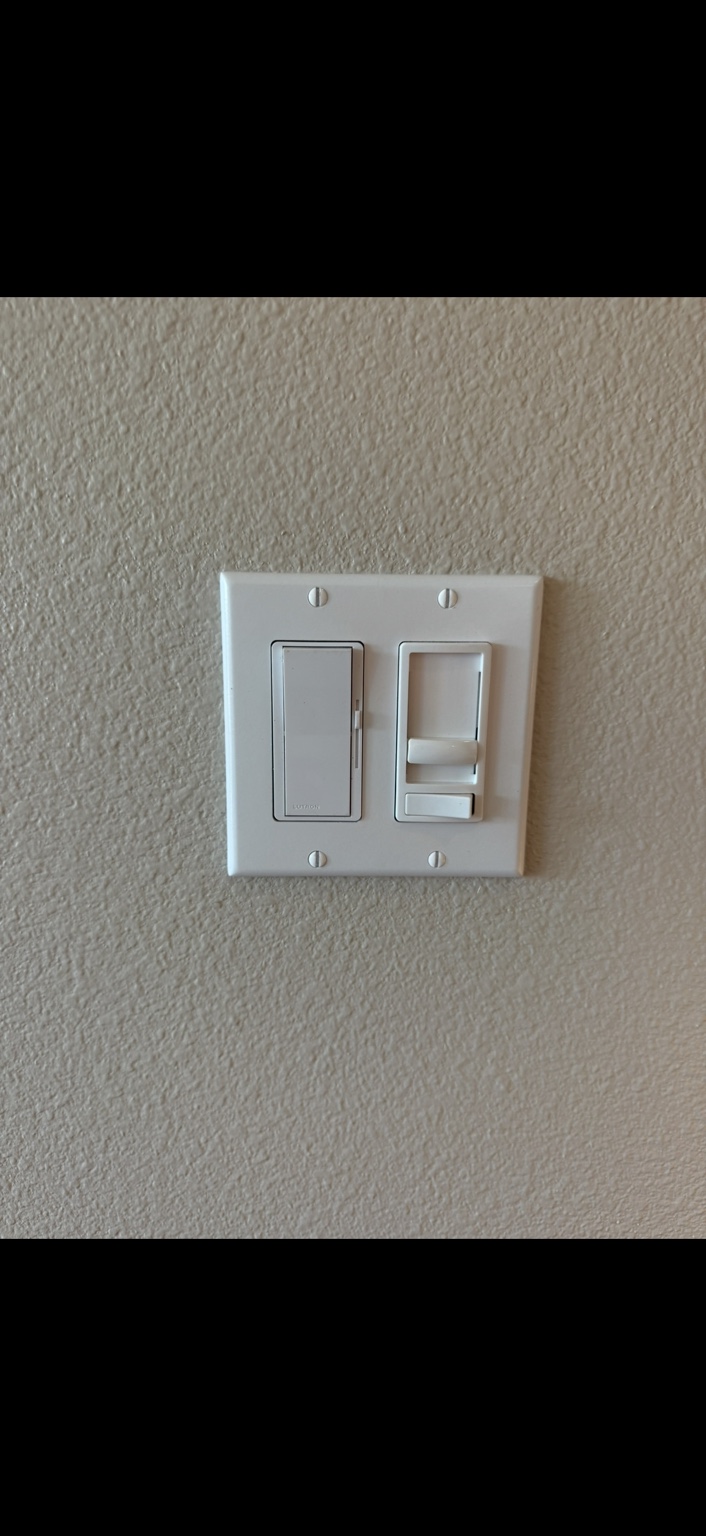
Begin with ordinary and multiple-location control
Eight useful choices begin with two familiar needs: an ordinary on/off switch and control from more than one location. A rocker or toggle can remain the right solution when simple operation matters most. At a hallway or room with several entrances, discuss a compatible multiple-location arrangement. Before choosing a decorative style, tell the electrician which existing controls must keep working and how you want each entrance to behave.
Choose dimming for the actual lighting
The third option is a dimmer. It can make one room useful for different activities, but compatibility depends on the lamp or fixture and the control. Leviton recommends checking the lighting type, wiring requirements, and number of control locations. Use the manufacturer's compatibility information for the exact models rather than assuming every LED dims alike. Ask the installer to demonstrate the useful brightness range and address flicker or unexpected shutoff before the work is accepted.
Decide whether a sensor should turn lights on
Options four and five are occupancy and vacancy controls. An occupancy control can switch lights on automatically and turn them off after an adjustable period without detected movement. A vacancy control starts with a manual press and provides automatic shutoff. Consider how the room is used: someone sitting still, daylight through a window, or passing traffic may affect the desired behavior. Choose the mode, placement, and delay together rather than selecting solely by appearance.
Compare timers with connected switches
A timer is the sixth choice; it may provide a countdown or a programmed schedule, depending on the model. A connected smart switch is the seventh and can add app-based operation or supported integrations. These features solve different needs. A predictable exterior-light schedule does not automatically require a whole-home system. Confirm the exact product's network requirements, manual operation, and behavior after a power or internet interruption before deciding which approach suits the household.
Use scene controls where grouping helps
The eighth option is a scene controller, which can activate supported groups of devices or settings from a button. Give each button an understandable purpose. Across all eight choices, have the electrician verify the load rating, neutral-wire requirements, wall-box conditions, and compatible companion devices. A lighting dimmer is not a substitute for a properly selected fan-speed controller. Keep a model list and operating instructions, and leave switch replacement and wiring identification to qualified personnel.