
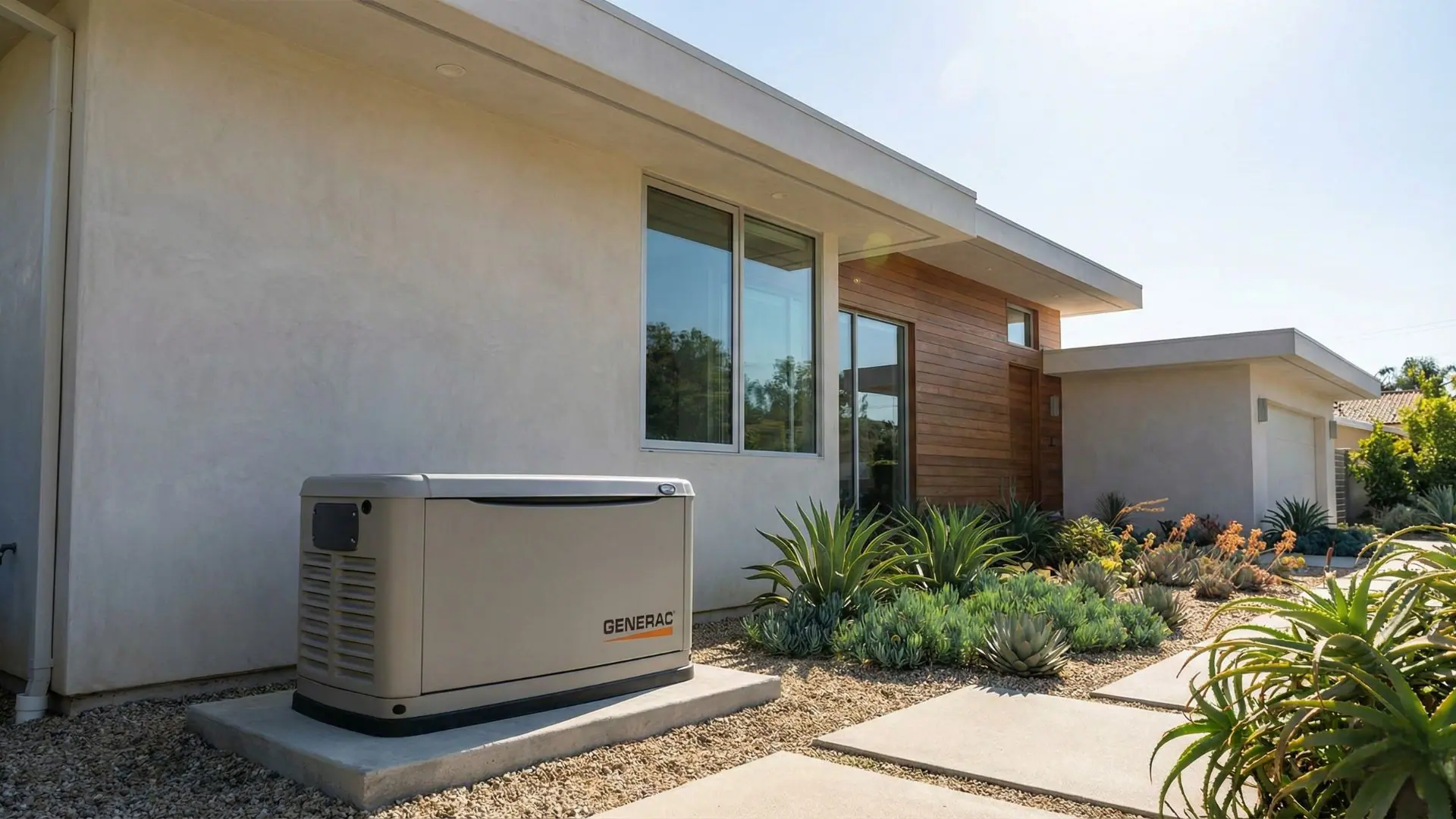
Generators & backup power
Evaluate essential circuits, fuel availability, equipment placement, and service capacity before selecting a portable connection, transfer system, battery integration, or standby generator.
The short answer
The first decision is what must stay powered—not which generator has the biggest number.
A reliable backup plan begins with essential loads and how long they need to operate. The electrical scope then coordinates starting demand, transfer equipment, panel distribution, generator or battery equipment, fuel or charging source, placement, ventilation, access, permits, and safe operation.
Backup power is planned from essential loads, transfer method, fuel, placement, service conditions, and operating responsibility.
Service details
Open only the details you need.
Service choices and booking stay above. Scope, preparation, questions, and technical detail remain available here without turning the page into a wall of sections.
01When this service fitsCommon situations and the patterns worth reporting.+
Define the outage plan before selecting equipment
Backup systems fail expectations when the loads and operating rules are vague.
This work begins with project review because equipment, fuel, transfer, placement, and the property’s service conditions must be understood together.
The essential-load list keeps growing
Separate must-have circuits from convenience loads so equipment and runtime expectations remain realistic.
High-starting-load equipment matters
Motors, pumps, compressors, and HVAC can require more starting capacity and different sequencing than steady loads.
Fuel or stored energy is not yet defined
Natural gas, propane, gasoline, or batteries change placement, runtime, trade coordination, maintenance, and operating procedures.
The generator would sit far from the service
Conductor routing, transfer equipment, fuel, exhaust, sound, access, clearances, trenching, and restoration affect the project.
An existing system has never been load-tested
A system that starts without representative loads may still have transfer, capacity, maintenance, or circuit-selection issues.
Several people may operate the system
Labels, written steps, safe connection order, load limits, storage, and maintenance responsibilities need a clear handoff.
02What we review and includeThe system, available paths, and the defined service scope.+
Separate generation, transfer, and distribution
Backup power has to create energy, transfer it safely, and deliver it only to the planned loads.
The source may be portable, permanently installed, or stored in batteries, but it cannot be evaluated alone. Transfer equipment separates normal utility power from the backup source, while panels or selected circuits determine what the system actually serves.
The project review aligns equipment ratings with starting and running loads, service and panel conditions, fuel or charging source, placement, conductor routes, environmental and access considerations, permits, trade responsibilities, testing, maintenance, and customer operation. Because those variables are project-specific, the website does not invent a starting price.
Four backup strategies to compare
Portable generator connection
A defined inlet and listed transfer approach for selected loads, paired with clear operating limits and storage responsibilities.
Automatic standby system
Permanent generation, transfer, fuel, placement, load planning, controls, maintenance, and multi-trade coordination.
Battery backup coordination
Stored-energy equipment aligned with the electrical service, selected loads, operating goals, controls, and other energy systems.
Essential-load distribution plan
Circuit selection, load prioritization, sequencing, and documentation that can support the chosen backup source.
Reviewed project scope
What should be resolved before backup equipment is ordered or connected.
The final scope depends on the selected system and property. A responsible proposal makes the operating assumptions and trade boundaries visible.
- 01Essential-load list with starting demand, operating demand, priority, and expected runtime discussed
- 02Existing service, panel, distribution, transfer, and accessible circuit conditions reviewed
- 03Generator, battery, inlet, transfer, controls, and customer-supplied equipment responsibilities identified
- 04Fuel or charging source, placement, access, ventilation, sound, clearances, and maintenance assumptions documented
- 05Conductor route, trenching, restoration, permits, inspection, utility, and other-trade responsibilities assigned
- 06Representative operating test, circuit labels, customer instructions, and ongoing service plan included in closeout
03Project paths and next stepsHow the work is classified and what happens after you request service.+
Start with the outage objective
Three planning paths keep backup expectations realistic.
The website routes all backup-power work to staff review so equipment and property conditions can be evaluated before pricing.
Portable power for selected essentials
Plan the connection, transfer method, selected loads, fuel handling, storage, and operating instructions.
Automatic standby power
Coordinate generation, fuel, transfer, placement, electrical capacity, permits, testing, and maintenance.
Battery or mixed backup plan
Align stored energy with essential loads, service equipment, controls, solar or other systems, and runtime goals.
From essential loads to an operable system
A backup project should be testable, explainable, and maintainable.
The sequence turns a wish for whole-property power into a defined system with known limits and responsibilities.
- 01
Prioritize the loads
List essential circuits, high-starting-load equipment, operating sequence, duration, and comfort expectations.
- 02
Review the service and site
Evaluate distribution, transfer options, equipment location, fuel or energy source, route, access, and constraints.
- 03
Assign the project responsibilities
Clarify electrical, fuel, concrete, trenching, permits, utility, equipment, startup, and maintenance scope.
- 04
Install and label the authorized system
Complete the defined electrical work and keep transfer, circuits, controls, and operating limits understandable.
- 05
Test and hand off
Operate the system with representative loads where appropriate and review procedures, limits, shutdown, and maintenance.
04Questions to ask any electricianThree practical questions, written-scope checks, and warning signs.+
Straight answers
Backup-power questions to answer before choosing equipment.
Why is there no online starting price for generator work?
The complete scope depends on essential loads, starting demand, equipment, transfer method, fuel or stored energy, placement, service conditions, conductor route, permits, access, and trade coordination. A reviewed project scope is more responsible than an invented number.
Can a portable generator power the whole property?
That depends on the generator, connection, transfer equipment, service and distribution, starting and running loads, fuel, and operating plan. Portable systems are commonly planned around selected loads and explicit limits.
What is transfer equipment for?
It provides a listed method to select normal or backup power and prevents the backup source from energizing the utility side. The exact equipment depends on the system and property.
Does SoCal provide the fuel work?
Fuel, concrete, trenching, equipment supply, startup, and other-trade responsibilities must be identified in the reviewed scope. They are not assumed from the electrical page.
How should an existing backup system be evaluated?
Review equipment condition, service records, transfer operation, selected circuits, fuel or storage, controls, labels, representative load behavior, operating instructions, and any open findings.