
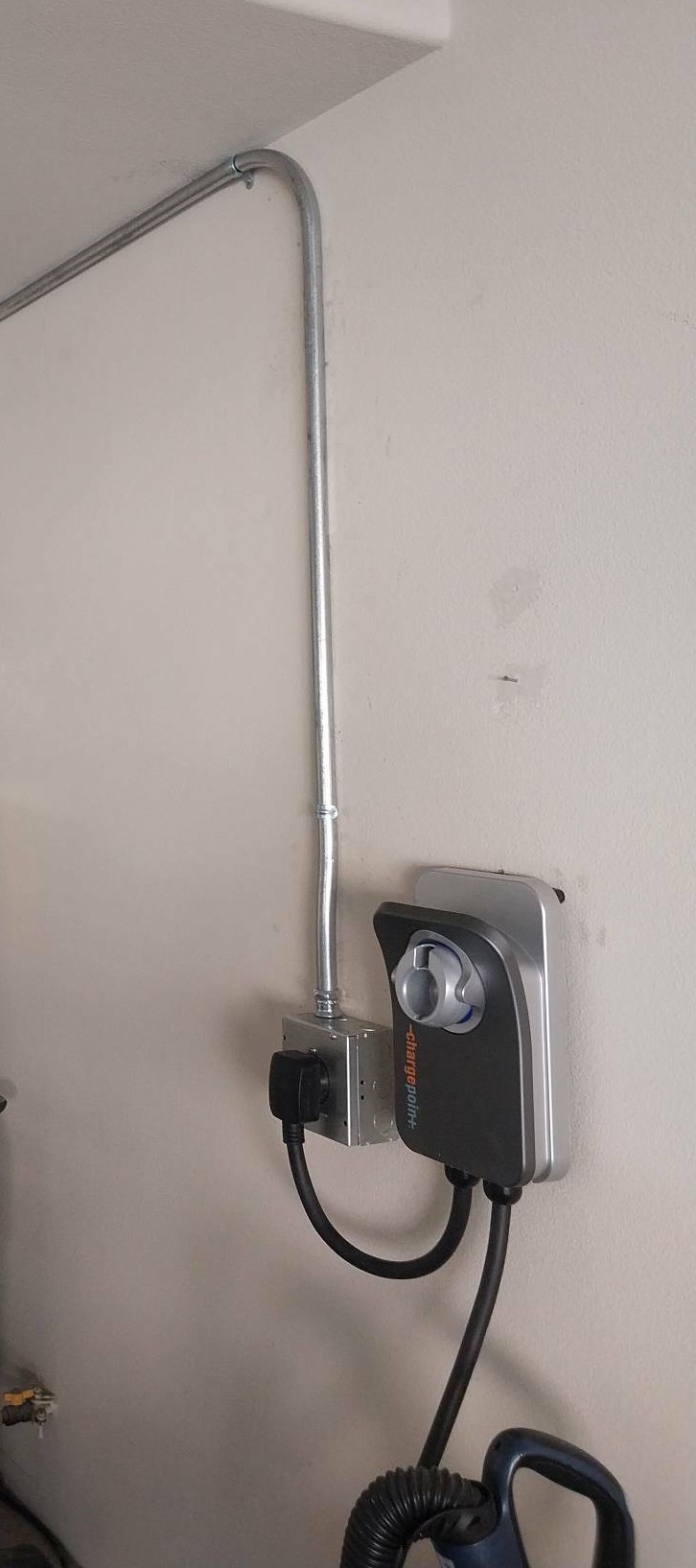
EV chargers & 240V circuits
Plan charging equipment, circuit capacity, cable routing, permitting, and installation around the vehicle and the property’s existing electrical service.
Choose the work
Choose the project for the site assessment.
Choose the closest project to carry its planning range into the assessment request. The time selected online is for an on-site assessment—not the installation appointment.
240V EV charging outlet — up to 25 feet
$1,400–$1,700Install a 240V charging outlet from the existing panel with a route up to approximately 25 feet.
The time selected online is for the site assessment—not the installation.Start site assessmentLevel 2 EV charger connection — up to 50 feet
$1,900–$2,300Install a dedicated charging circuit from the existing panel with a route up to approximately 50 feet. The final outlet or hardwired connection is confirmed during the site review.
The time selected online is for the site assessment—not the installation.Start site assessment240V EV charging outlet — up to 100 feet
$2,900–$3,600Install a 240V charging outlet from the existing panel with a route up to approximately 100 feet.
The time selected online is for the site assessment—not the installation.Start site assessmentPlanning ranges are not final quotes. The time selected online is for an on-site assessment—not installation. SoCal confirms access, equipment compatibility, permit requirements, site conditions, final scope, and price before work is scheduled.
The short answer
Useful EV charging is a complete circuit plan—not simply a receptacle near the car.
Charging speed and installation scope depend on the vehicle, charger, available electrical capacity, parking location, route length, protection, equipment instructions, permits, and future plans. Those decisions should be aligned before equipment is mounted.
The right charger installation matches the vehicle, daily charging need, panel capacity, equipment, and actual cable route.
Service details
Open only the details you need.
Service choices and booking stay above. Scope, preparation, questions, and technical detail remain available here without turning the page into a wall of sections.
01When this service fitsCommon situations and the patterns worth reporting.+
Plan for the charging experience you will actually use
Vehicle, equipment, capacity, and route all affect the result.
A clean installation begins with accurate information. These are the conditions that most often change the scope or the charging plan.
The vehicle has a limited onboard charging rate
A larger circuit does not make every vehicle charge faster; usable output should be matched to the vehicle and daily need.
The panel is already serving major loads
HVAC, pool, spa, cooking, water heating, solar, storage, and other equipment belong in the capacity review.
The route crosses finished or outdoor areas
Wall access, ceiling type, exterior exposure, trenching, and restoration can matter as much as straight-line distance.
The charger has specific requirements
Hardwired and receptacle-based equipment differ in connection, protection, settings, mounting, and responsibility.
Parking or vehicles may change
Cord reach, mounting location, a second EV, and future equipment can influence today’s placement and capacity decision.
An existing outlet was not installed for continuous EV use
Do not assume an older receptacle, circuit, or adapter is suitable; the equipment and complete circuit need verification.
02What we review and includeThe system, available paths, and the defined service scope.+
Match the entire charging chain
Charging performance is limited by the lowest-capacity part of the system.
The vehicle, charging equipment, circuit, panel, service, utility supply, and daily schedule all shape the usable result. The plan should begin with the vehicle’s accepted charging rate and the energy that must be replaced overnight, then work back through the equipment and property.
The installation scope confirms the route length and access, conductor and protection requirements, hardwired or receptacle connection, charger settings, mounting, permits, compatibility, and any capacity strategy. A panel upgrade is considered only when the verified electrical plan calls for it.
Charging connections and capacity plans
240V receptacle circuit
For compatible portable equipment where the defined route, receptacle, enclosure, protection, and use conditions are appropriate.
Hardwired wall connector
For customer-supplied listed equipment mounted and connected according to its instructions and the verified circuit plan.
Capacity-managed charging
When service capacity is constrained, compatible controls or adjusted output may be reviewed instead of assuming a larger service.
Panel and charger coordinated together
For properties where new distribution or panel work is already part of the electrical plan.
A charger plan that can be verified
What should be known before the installation is authorized.
The public ranges are tied to defined circuit lengths and connection types. Field conditions determine whether a selected range applies.
- 01Vehicle, connector, charging-equipment model, accepted charging rate, and daily-use review
- 02Panel, service, available circuit position, and relevant existing-load verification
- 03Measured route and access review rather than straight-line distance alone
- 04Circuit, conductor, protection, receptacle or hardwired connection, and mounting plan
- 05Permit, inspection, equipment-setting, network, and responsibility assumptions identified
- 06Operating review with the selected charger output and any future-use limitations documented
03Project paths and next stepsHow the work is classified and what happens after you request service.+
Choose the route that matches the property
Three planning lanes keep distance and equipment clear.
The published request-ready ranges are organized around defined route lengths and a compatible receptacle or customer-supplied hardwired charger.
Panel and parking are close
For a short, accessible route where the selected charging equipment and electrical capacity can be verified.
The circuit crosses the building
For longer routes through garage, attic, wall, exterior, or other accessible construction conditions.
Capacity or routing needs review
For constrained panels, complex access, detached parking, trenching, multiple EVs, or an uncertain equipment plan.
From vehicle to verified charging
A charging installation should be right-sized before material is selected.
The sequence prevents a charger choice from getting ahead of the property’s capacity and route conditions.
- 01
Define the charging need
Confirm vehicle, daily mileage, charging window, equipment, parking position, and future-use expectations.
- 02
Verify the electrical capacity
Review the service, panel, relevant loads, circuit position, and any compatible capacity strategy.
- 03
Walk and measure the route
Identify access, surfaces, bends, penetrations, weather exposure, trenching, and restoration assumptions.
- 04
Confirm scope and range
Match the verified connection type and route length to the defined work or move the project to staff review.
- 05
Install, set, and explain
Complete the authorized circuit and connection, verify operation, review charger settings, and document any limits.
04Questions to ask any electricianThree practical questions, written-scope checks, and warning signs.+
05Helpful guidesRelated articles from SoCal’s existing public library.+
From SoCal’s existing library
Go deeper before you decide.
These are existing SoCal Electrical & Lighting articles—not newly invented project claims. Each opens in the current public article archive.
What Should Homeowners Know About Installing EV Chargers at Home?
Circuit capacity, equipment placement, permitting, inspection, and installation planning for home EV charging.
Read full article →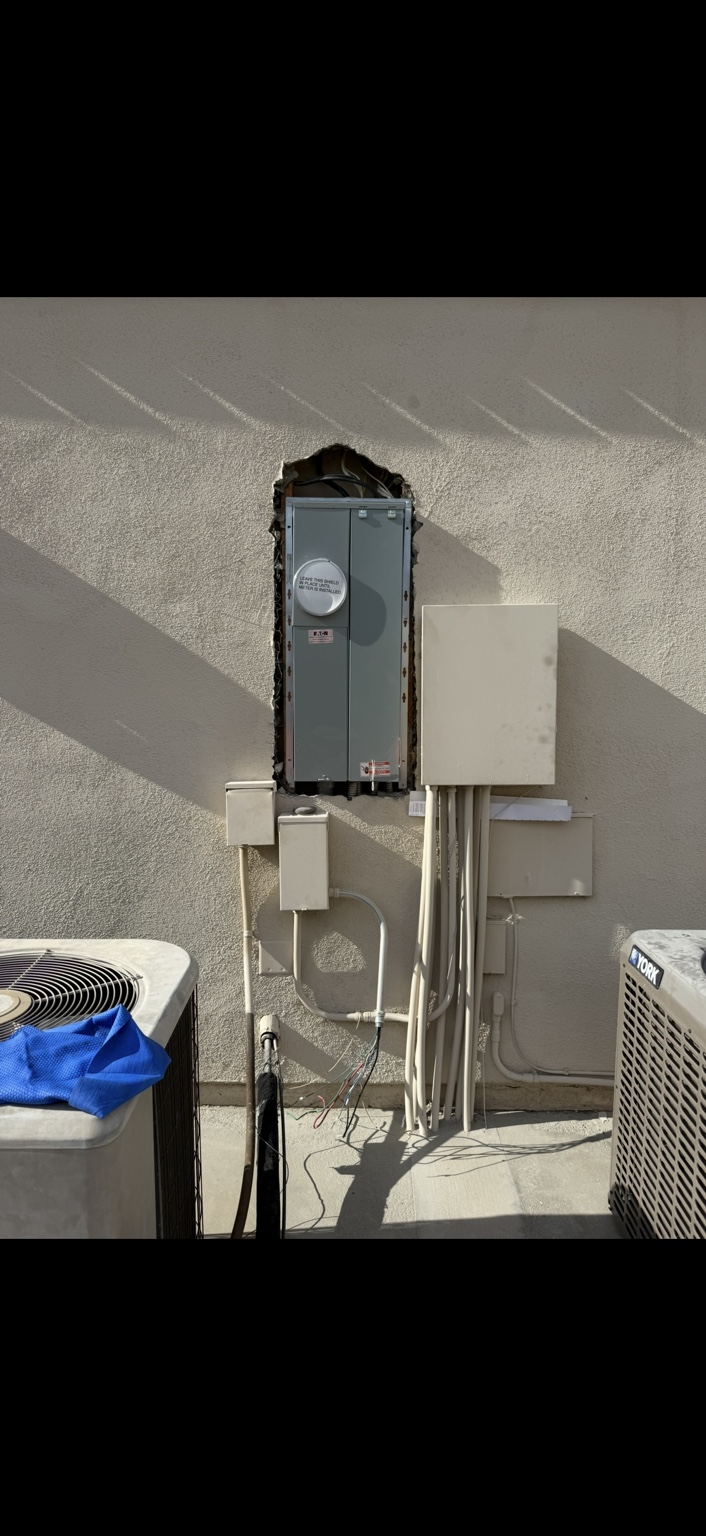
Electrical Panel Upgrades for Level 2 EV Chargers
How load calculations, panel capacity, and dedicated-circuit requirements influence a Level 2 home-charging plan.
Read full article →Straight answers
EV charging questions to settle before installation.
Do I automatically need a panel upgrade for Level 2 charging?
No. The decision depends on verified service and panel conditions, existing loads, the vehicle’s usable charging rate, charger settings, and any compatible capacity-management approach.
Should I choose a receptacle or a hardwired charger?
The answer depends on the equipment, desired output, installation environment, connection requirements, portability, manufacturer instructions, and responsibility for the customer-supplied charger. Both paths require a verified circuit plan.
How is the route length determined?
It is based on the practical installed route, including panel access, walls, attic or ceiling conditions, exterior sections, bends, mounting, and any trenching—not only the straight-line distance to the vehicle.
Can SoCal install the charger I already purchased?
Customer-supplied listed equipment can be included after the model, instructions, connector, output, mounting, circuit requirements, condition, and warranty responsibilities are reviewed.
Can I add surge protection or a safety inspection?
Eligible EV requests can include the separately itemized surge-protection range or home electrical safety inspection. Neither is preselected, and both remain removable beside the total.