
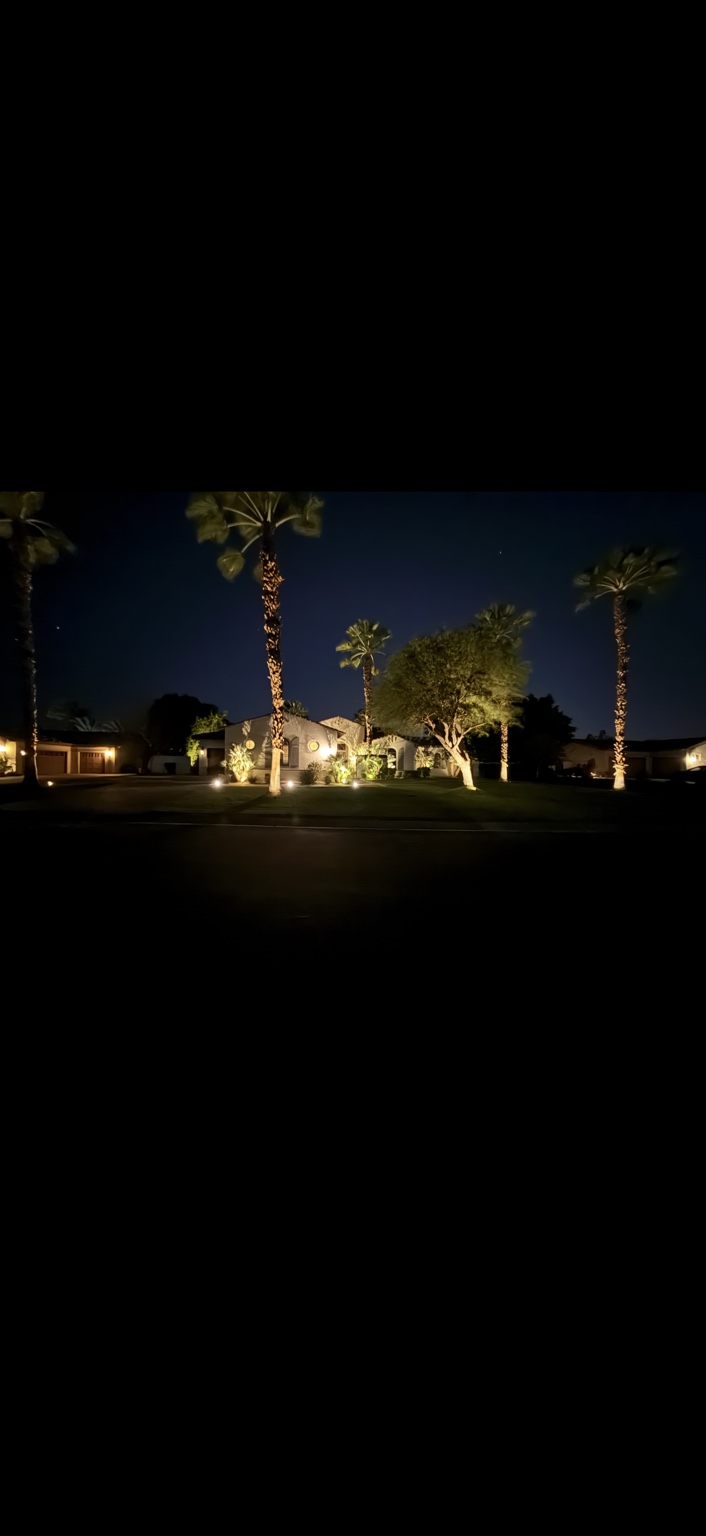
Landscape & outdoor lighting
Plan paths, entries, architecture, landscaping, transformers, controls, cable routing, fixture aiming, and maintenance as one coordinated exterior-lighting system.
Choose the right visit
Start with what you know—not a technical parts list.
If the cause is unknown, choose the paid diagnostic. If you already know the replacement or project you want reviewed, schedule a no-charge on-site estimate.
Troubleshooting or system evaluation
$155 first hourChoose this when lights, transformers, or controls are not operating correctly and the cause is unknown. The visit begins with diagnosis; repairs are explained and priced separately.
Start diagnostic requestBulb replacement or light repair
Free site assessmentChoose this when the lamp, fixture, or known repair is already identified and you want the technician to review the work before pricing it. Unknown faults begin with the $155 diagnostic.
Schedule site assessmentNew system or add to existing
Free site assessmentChoose this for a new landscape-lighting plan, added fixtures, new zones, transformer changes, or an expansion of the existing system.
Schedule site assessmentThe site assessment is free. It is for reviewing a planned scope. Diagnostic testing, repair, materials, and installation are not included and require separate authorization. If the problem’s cause is unknown, start with the $155 first-hour diagnostic.
The short answer
Outdoor lighting works best when the entire property is planned as one system.
The useful result is not simply more fixtures. It is comfortable visibility, restrained glare, reliable controls, serviceable cable routes, and a design that still makes sense after plants mature or the property changes.
Designed around the property after dark—not selected from a fixture catalog in daylight.
Service details
Open only the details you need.
Service choices and booking stay above. Scope, preparation, questions, and technical detail remain available here without turning the page into a wall of sections.
01When this service fitsCommon situations and the patterns worth reporting.+
Know what the system is telling you
Common outdoor-lighting problems are rarely solved by adding one brighter lamp.
These conditions point to a design, connection, control, load, or maintenance issue that should be evaluated as part of the whole system.
Lights fade farther from the transformer
A long run, conductor size, connection condition, or total load can leave the last fixtures visibly dimmer.
One area went dark after yard work
Irrigation, planting, edging, or hardscape work can disturb shallow cable routes and field connections.
The transformer trips, hums, or runs hot
Equipment condition, load, connections, ventilation, and weather exposure all belong in the review.
Fixtures produce glare instead of visibility
Output, beam spread, shielding, placement, and aiming determine whether a fixture helps or distracts.
Controls drift or stop following sunset
Photocells, astronomical timers, schedules, and app controls can fail or conflict with one another.
Cable or connections are exposed
Visible splices, damaged insulation, standing water, and loose fixtures are signs the system needs more than cosmetic adjustment.
02What we review and includeThe system, available paths, and the defined service scope.+
Plan the light before the hardware
A strong exterior plan balances use, atmosphere, wiring, and future maintenance.
The design starts with what must be visible: walking routes, changes in elevation, entries, addresses, gathering areas, and the features worth highlighting. From there, fixture type and placement are chosen to shape the view without flooding the property with uncontrolled brightness.
The electrical plan then connects those decisions to transformer capacity, voltage drop, cable routes, zones, controls, mounting conditions, and access for future service. Final aiming is done after dark because beam spread and glare cannot be judged responsibly from a daytime drawing alone.
Four ways an outdoor-lighting project can begin
Repair the existing system
Identify failed equipment, damaged cable, poor connections, control problems, and fixtures that no longer serve the design.
Expand what already works
Verify remaining transformer capacity and cable conditions before adding a new path, tree, entry, or outdoor room.
Create a new zoned system
Plan separate areas and controls so circulation, entertaining, and accent lighting can operate appropriately.
Rework an outdated layout
Reduce glare, improve aiming, replace failing components, and simplify a system that has been added to repeatedly.
A complete planning standard
What should be resolved before the installation is considered complete.
The exact scope depends on the selected work, but every responsible outdoor-lighting plan should address the same core decisions.
- 01Lighting priorities for paths, entries, architecture, landscape, and outdoor living
- 02Existing transformer, load, control, and accessible cable-condition review
- 03Fixture purpose, output, beam spread, shielding, finish, and mounting method
- 04Cable routing, connection protection, landscape access, and known restoration limits
- 05Control strategy for dusk, schedules, zones, switches, or compatible app control
- 06Nighttime aiming, glare adjustment, operating review, and future-service access
03Project paths and next stepsHow the work is classified and what happens after you request service.+
Choose the outcome—not a pile of parts
Three practical ways to scope the work.
These paths help define the first conversation. Final quantities and equipment follow the property, not a generic fixture count.
Safer approach and entry
Prioritize steps, walking routes, gate or address visibility, and the main arrival sequence.
Landscape and architectural accents
Shape selected trees, walls, columns, textures, and focal points with controlled beams and restrained glare.
Whole-property lighting plan
Coordinate circulation, outdoor living, architecture, zones, controls, cable routes, and future maintenance as one system.
From first walk-through to final aiming
A process built around how the property looks and works at night.
The project moves from priorities to a maintainable electrical plan, with scope and price reviewed before additional work is authorized.
- 01
Walk the property
Identify circulation, gathering areas, visual priorities, existing equipment, access, and likely cable routes.
- 02
Build the lighting and electrical plan
Coordinate fixture purpose, zones, transformer capacity, controls, mounting, and known site constraints.
- 03
Confirm scope and range
Review the listed components, quantities, access assumptions, exclusions, and any restoration responsibilities.
- 04
Install and protect the system
Set equipment, route cable, make listed connections, and keep components accessible for future service.
- 05
Aim after dark
Balance the scene, reduce glare, verify controls, and explain normal operation and maintenance needs.
04Questions to ask any electricianThree practical questions, written-scope checks, and warning signs.+
05Helpful guidesRelated articles from SoCal’s existing public library.+
From SoCal’s existing library
Go deeper before you decide.
These are existing SoCal Electrical & Lighting articles—not newly invented project claims. Each opens in the current public article archive.
Outdoor Landscape Lighting to Improve Property Functionality
Layout, fixture, control, and maintenance considerations for practical outdoor and landscape lighting.
Read full article →How Can Outdoor Lighting Increase Home Safety and Curb Appeal?
How fixture placement, controls, and path lighting can support nighttime visibility and a more intentional exterior.
Read full article →Straight answers
Outdoor lighting questions worth answering before work begins.
Can SoCal repair an existing low-voltage system?
Yes. The first step is to review the transformer, controls, accessible cable and connections, fixture condition, and the parts of the system that still perform well. The findings determine whether repair, selective replacement, or redesign is the sensible path.
Do I need a complete property design?
Not always. A focused path, entry, or repair scope can stand on its own. A coordinated plan becomes more important when several areas share equipment, cable routes, controls, or visual sightlines.
Can I provide the fixtures?
Customer-supplied equipment can be reviewed for listing, voltage, output, beam, finish, mounting, control compatibility, lead time, and warranty responsibilities before it is included in the scope.
How are landscaping and trenching handled?
Cable routes, access, plant protection, hardscape conflicts, trenching, and restoration limits should be written into the project scope. Concealed irrigation, roots, utilities, and site conditions can change the final plan.
Why is final aiming done at night?
Daylight does not reveal beam edges, glare, shadow, reflection, or how adjacent fixtures interact. Nighttime adjustment is what turns installed hardware into a balanced lighting plan.