
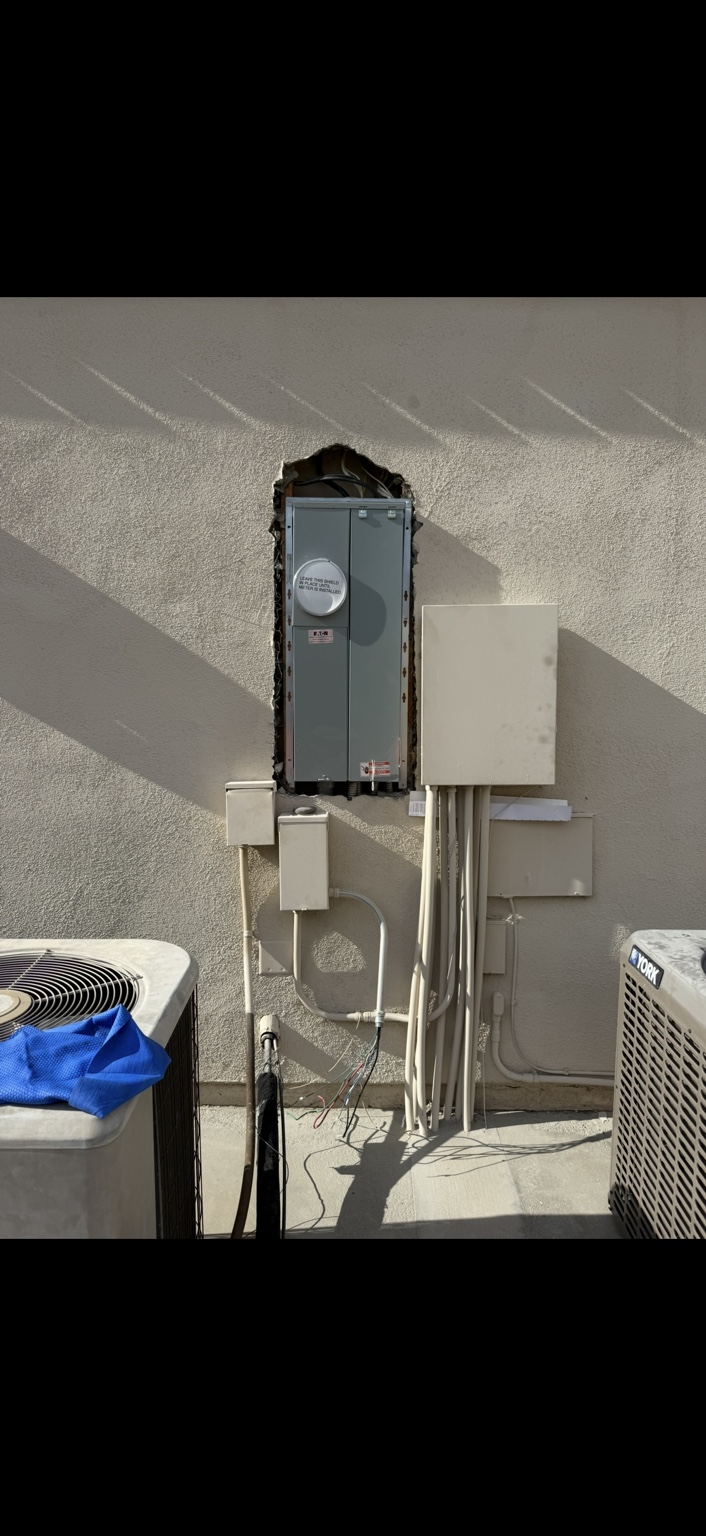
Panels, breakers & service upgrades
Evaluate the existing service, panel condition, distribution, and anticipated loads before planning repairs, panel replacement, or capacity upgrades.
Choose the work
Select the closest match—or schedule an assessment.
Choose a listed project to carry its planning range into the assessment request. The time selected online is for the site assessment—not installation. If you’re not sure which project fits, request the two-hour panel review.
125-amp subpanel near existing equipment
$1,300–$1,600Add a 125-amp subpanel near the existing electrical equipment under standard accessible conditions.
The time selected online is for the site assessment—not the installation.Equipment and included components are confirmed before authorization.Start site assessment150-amp subpanel near existing equipment
$1,900–$2,400Add a 150-amp subpanel near the existing electrical equipment under standard accessible conditions.
The time selected online is for the site assessment—not the installation.Equipment and included components are confirmed before authorization.Start site assessment200-amp overhead-feed panel installation
$3,200–$4,000Replace an existing overhead-fed 200-amp meter and main panel in the same location under the listed assumptions.
The time selected online is for the site assessment—not the installation.Start site assessment200-amp underground-fed panel replacement
$3,700–$4,700Replace an underground-fed 200-amp meter and main panel in the same location under the listed assumptions.
The time selected online is for the site assessment—not the installation.Start site assessmentPanel upgrade estimate & review
Free site assessment · 2 hours requestedRequest an on-site visit to review the existing panel, service conditions, access, and your goals. We’ll explain which panel project—if any—fits the property.
There is no charge for the estimate visit. No installation is selected or authorized. Any recommended installation scope and pricing are provided separately.Schedule site assessmentInstallation planning ranges apply only to the four listed projects and are not final quotes. Access, existing conditions, equipment compatibility, permits, utility requirements, concealed conditions, finish work, and work outside the listed scope can change the final price. The requested two-hour assessment does not include or authorize installation; any recommended work and pricing are provided separately.
The short answer
A panel project should solve the distribution problem you have now and the capacity plan you have next.
Replacement, expansion, and service upgrades are different projects. The right scope depends on equipment condition, available spaces, connected and planned loads, service type, grounding and bonding observations, access, permits, and utility coordination.
Panel work begins with the loads, equipment, location, utility conditions, and future plan—not amperage alone.
Service details
Open only the details you need.
Service choices and booking stay above. Scope, preparation, questions, and technical detail remain available here without turning the page into a wall of sections.
01When this service fitsCommon situations and the patterns worth reporting.+
Know when the panel deserves a closer look
Capacity, condition, and circuit protection are separate questions.
A responsible recommendation considers what the equipment is doing, what it serves, and what the property is expected to support next.
Visible heat or physical damage
Discoloration, corrosion, unusual sound, odor, loose covers, and reported heat should be evaluated promptly.
Recurring breaker concerns
Repeated tripping, nuisance operation, or a breaker that will not reset needs diagnosis before a larger project is assumed.
Crowded or unclear distribution
Poor labeling, inaccessible equipment, and repeated additions can make future work harder to understand and service.
A new load changes the plan
EV charging, HVAC, pool equipment, appliances, and additions can alter both load and circuit-space requirements.
The equipment no longer fits the property
Age alone does not define the project, but compatibility, condition, serviceability, and future use can justify replacement planning.
Overhead versus underground service affects the scope
The two 200A ranges are separated by how utility power reaches the meter. Equipment, conductor routing, utility rules, and same-location constraints are confirmed before authorization.
02What we review and includeThe system, available paths, and the defined service scope.+
Think beyond the metal enclosure
The panel is the distribution point for an entire electrical plan.
Panel work connects the service, meter arrangement, feeders, branch circuits, protective devices, grounding and bonding, labeling, and the loads used throughout the property. That is why the correct scope cannot be chosen from a photograph of the cover alone.
A site review confirms the existing rating and service type, equipment location and access, known circuit conditions, planned loads, utility involvement, permit path, outage expectations, and components required for the selected panel scope. Items required by the final plan are confirmed by the electrician rather than sold as a long technical add-on list.
Four ways a panel project is commonly scoped
Add a subpanel
Create practical distribution for added circuits while verifying feeder capacity, location, working space, and the upstream panel.
Replace an overhead-fed main panel
Coordinate the overhead utility feed, same-location metering, circuit transfer, grounding and bonding, permits, outage, and labeling.
Plan an underground-fed replacement
Account for the service configuration and field conditions that distinguish underground-fed equipment from the overhead-fed same-location option.
Diagnose before replacing
When the concern is one breaker, one circuit, or an unknown fault, begin with verification rather than assuming the panel is the cause.
Complete panel-scope thinking
What a responsible panel proposal should make clear.
The published ranges correspond to the listed complete project choices. Required technical components are verified within that selected scope, not presented as a homeowner parts menu.
- 01Existing service type, equipment rating, condition, location, access, and working-space review
- 02Connected and planned-load discussion for EV, HVAC, pool, spa, remodel, solar, or storage work
- 03Panel or subpanel choice matched to the defined project range and known site conditions
- 04Permit, inspection, utility, outage, meter, and scheduling responsibilities identified before work
- 05Grounding, bonding, circuit transfer, protective-device, and compatibility needs confirmed by the electrician
- 06Circuit directory and clear labeling with every new panel or subpanel
03Project paths and next stepsHow the work is classified and what happens after you request service.+
Choose the panel project—not individual parts
Three homeowner-level decisions keep the request clear.
Start with the outcome. The electrician verifies the breakers, grounding, bonding, labeling, connectors, and other technical components required by the selected scope.
Add distribution with a subpanel
For added circuits or a project area that needs organized capacity without assuming a complete service replacement.
Match the panel range to the utility feed
Identify overhead versus underground service before choosing a same-location 200A panel option; SoCal verifies the feed and field conditions before final scope.
Review capacity for a planned load
For EV charging, HVAC, pool, spa, remodel, solar, storage, or other work that may affect the service plan.
From existing conditions to documented distribution
Panel work is planned before the property is taken offline.
The sequence confirms the correct scope, identifies external dependencies, and leaves the new distribution understandable after completion.
- 01
Document the existing service
Confirm rating, service type, equipment, location, access, circuit use, condition, and known symptoms.
- 02
Review loads and the future plan
Compare current demand with proposed equipment and the practical distribution the property needs.
- 03
Confirm permit and utility steps
Identify inspection, metering, outage, utility, and scheduling responsibilities before authorization.
- 04
Transfer and verify the circuits
Complete the defined panel work, required connections, protection, grounding and bonding, and circuit organization.
- 05
Label and close out
Provide a clear circuit directory, explain the completed scope, and separate any additional findings from authorized work.
04Questions to ask any electricianThree practical questions, written-scope checks, and warning signs.+
05Helpful guidesRelated articles from SoCal’s existing public library.+
From SoCal’s existing library
Go deeper before you decide.
These are existing SoCal Electrical & Lighting articles—not newly invented project claims. Each opens in the current public article archive.
How Does an Electrical Panel Upgrade Improve Home Safety?
Panel capacity, aging equipment, and the safety considerations that can lead homeowners to plan an upgrade.
Read full article →Electrical Panel Upgrades for Level 2 EV Chargers
How load calculations, panel capacity, and dedicated-circuit requirements influence a Level 2 home-charging plan.
Read full article →
Benefits of Upgrading Electrical Wiring in Older Homes
Why older wiring may need evaluation before modern loads, new appliances, or renovation work are added.
Read full article →Straight answers
Panel questions that should be answered before authorization.
How do I choose between the four published panel ranges?
Choose the homeowner-level scope that matches the project: a 125A or 150A subpanel, a 200A overhead-fed same-location meter/main panel, or a 200A underground-fed same-location meter/main panel. Overhead service usually arrives through visible wires from a utility pole; underground service usually enters from below grade. Underground is the most common SoCal panel path and is recommended when it matches the property’s existing feed. Field verification confirms which range applies.
Does a new panel include circuit labeling?
Yes. The listed panel and subpanel work includes a circuit directory and clear labeling. The electrician verifies the technical components needed for the selected scope.
Will the power be off?
Panel work generally requires an outage. The expected sequence and duration depend on the scope, utility involvement, inspection requirements, existing conditions, and coordination plan and should be discussed before authorization.
Are permits or utility coordination included automatically?
Responsibilities and allowances must be confirmed for the selected scope and location. Utility rules, metering, inspection, and permit conditions can change the schedule and final price.
Can surge protection or a safety inspection be added?
Eligible panel requests can include the separately itemized whole-home surge-protection range or home electrical safety inspection. Nothing is preselected, and each current amount appears beside the total for review or removal.