TroubleshootingPalm Springs
Tracing the service before a panel replacement
A targeted excavation established the underground feed route. Later work records document the completed panel installation and a passed electrical meter-release inspection.
Why the ground was opened
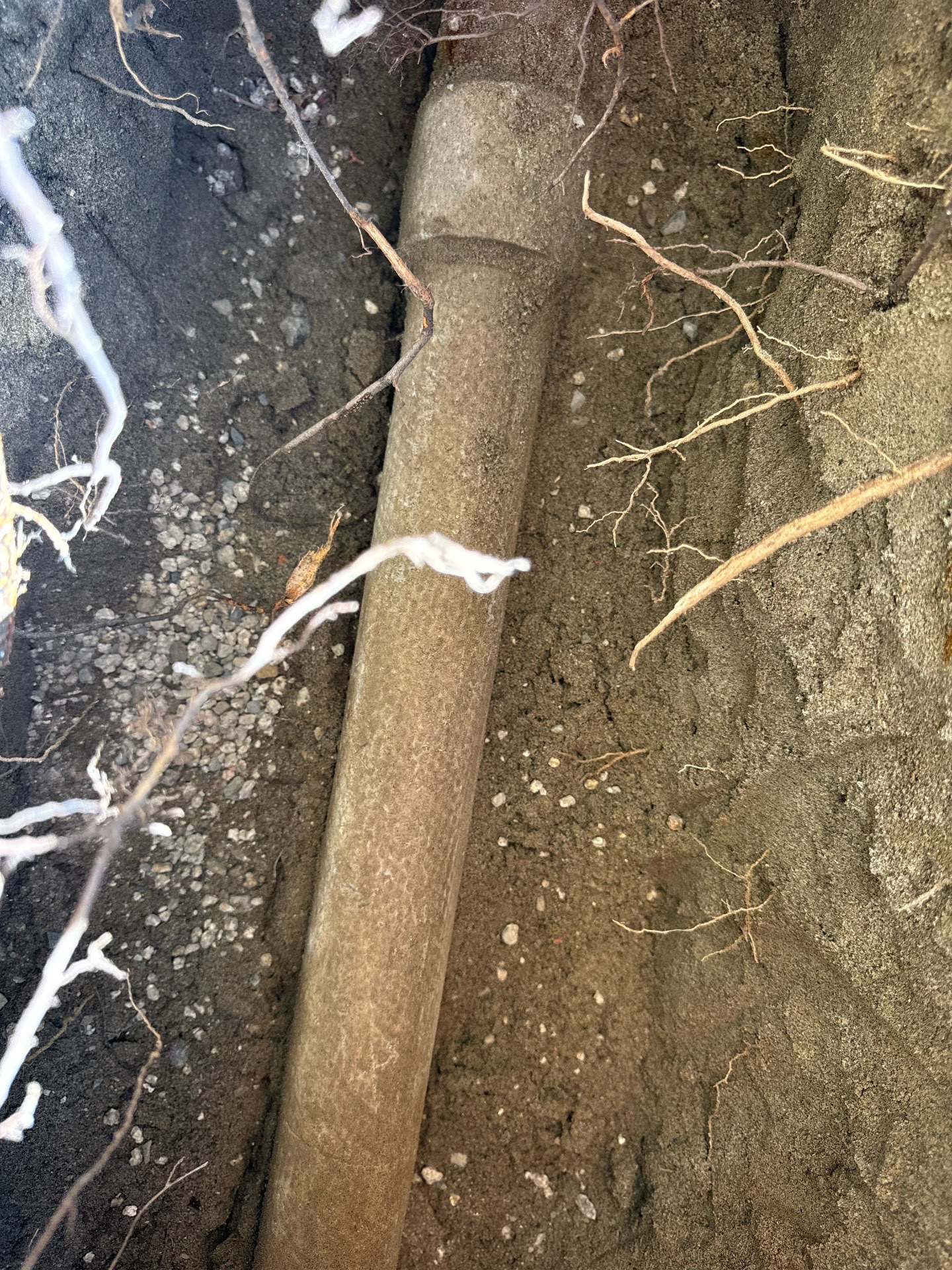
Before replacing the electrical panel, the crew needed to verify the type and path of the underground service feed. Southern California Edison requested targeted potholing near the panel to expose the service lateral and document the existing installation for utility coordination.
What the investigation found
The crew excavated approximately five feet from the panel and exposed the underground service route. The field notes identify the buried raceway as asbestos-cement (AC) conduit. At the panel, that conduit transitioned to a rigid-metal 90-degree elbow. The service conductors were inside the conduit, rather than directly buried in the ground.
Those details answered the key question behind the investigation: the feed followed an enclosed conduit route, and its transition into the panel could be seen and photographed instead of inferred. The field record notes that the AC conduit was not damaged or disturbed during the exposure. The crew photographed the findings for the utility to review.
From investigation to installation
The excavation visit ended with the open area secured while the utility reviewed the findings. With the service route established, the panel change moved through utility disconnection, removal of the existing main panel, installation of a new Eaton 42-space main panel and adjacent subpanel, and restoration of power.
A City of Palm Springs inspection worksheet marks the electrical meter-release inspection as Passed.